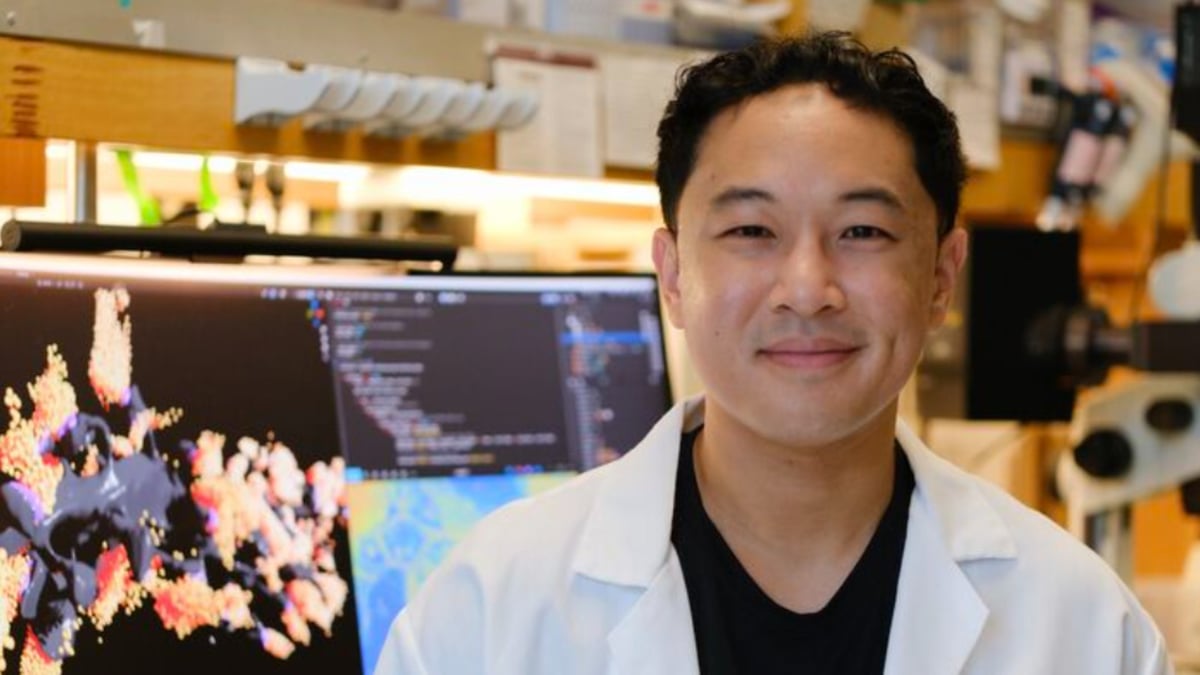
ChatGPT helps a neuroscience researcher turn connectomics data into memory insights
Marco Uytiepo is a PhD candidate in neuroscience at Scripps Research in San Diego, and ChatGPT is helping him turn colossal datasets charting the brain’s wiring into insights about memory. In Anton Maximov’s laboratory in Scripps’ Department of Neuroscience, Marco studies how neural circuits store experience—work that means sifting through millions of synapses and building 3D models from electron‑microscopy images.
Trained as an experimental scientist rather than a software engineer, he taught himself to code; ChatGPT helps him code data pipelines faster.
Before AI, he spent days writing and debugging MATLAB or Python, and weekends were spent troubleshooting. The first time he asked ChatGPT for a data processing pipeline—like parsing a dataset and quantifying features across millions of synaptic connections—it returned working code in seconds. Jobs that once took a week to refine were compressed to minutes. He pushed further, asking for Blender scripts to automate 3D reconstructions; those routines helped produce visualizations in the 2025 Science article where he figured as first author, complementing specialized machine‑learning tools used elsewhere in the project.
In biology, wet labs are where experiments on cells, tissues, or organisms happen at the bench; dry labs are where code‑based analysis, modeling, and visualization happen at the computer. Traditionally they lived apart but, as Marco puts it, “that line is getting blurred.” That’s because wet‑lab experiments now generate such torrents of data—image stacks, recordings, and tables that humans can no longer analyze manually. They need to process the data with software. So wet-lab experimentalists are adopting dry‑lab tools out of necessity. Uytiepo now bounces between MATLAB, Python, R, C++, and Bash, using ChatGPT as tutor, pair‑programmer, and debugging partner. It turns hours of searching and trial‑and‑error into a few precise prompts and helps him spin up pipelines across platforms.
The impact shows up in time and real science. Faster scripts mean more experiments run and more hypotheses tested. “This work would not have been done as fast or as well without this tool,” he says.
Marco still turns to targeted ML systems for circuit reconstruction, but ChatGPT helps him with the code that cleans, analyzes and visualizes the data, moving ideas from notebook to results in days instead of weeks. Across a single research project, those savings add up to months reclaimed for experiments, writing, and new conjectures.
For Marco and his peers, the stakes are personal. Understanding memory circuits is a step toward confronting dementia and other neurological disorders that touch nearly every family. If science moves faster, relief may arrive sooner for everyone.