
OpenAI Academy
Article
December 19, 2025

Clinical reasoning, practiced like a skill
Clinical reasoning, practiced like a skill
# healthcare
# medicine
# education
# Higher Education

Stanford’s Clinical Mind AI brings realistic patient simulation to health training with OpenAI’s API

Clinical reasoning, practiced like a skill
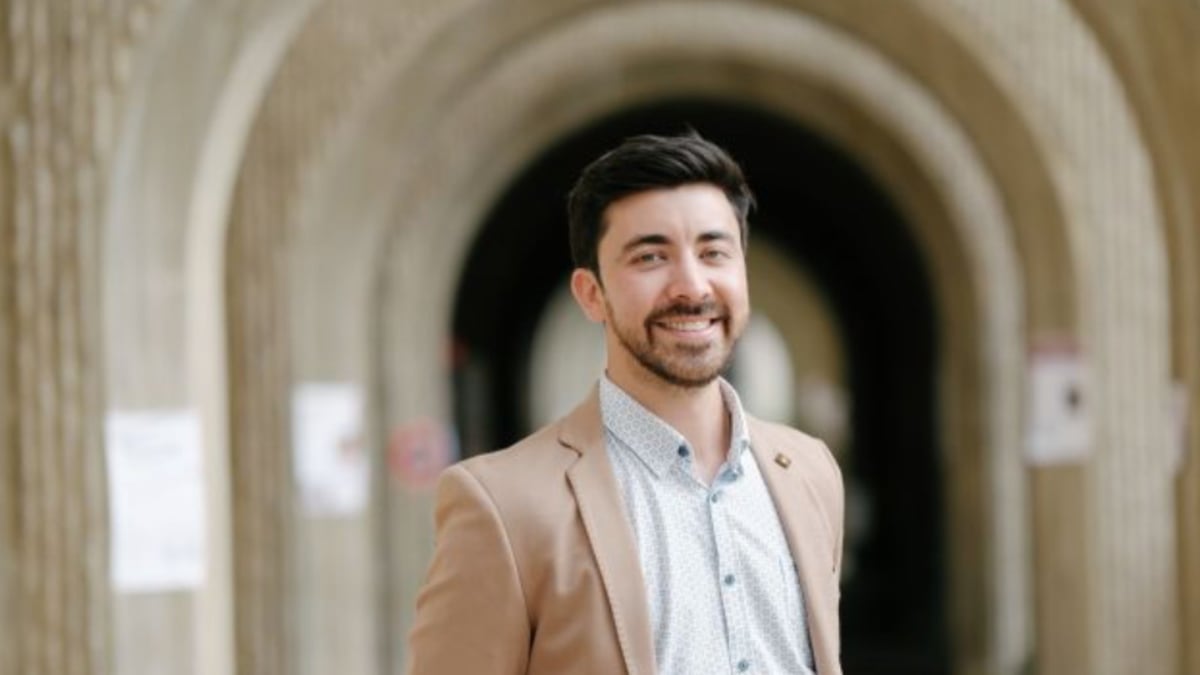
With OpenAI’s API, Stanford University project director Marcos Rojas Pino, MD is building Clinical Mind AI, a research platform that treats clinical reasoning as a skill you can practice in realistic simulations. He defines clinical reasoning as the process of gathering information from a patient’s history, exam, and tests—then making decisions such as treatment, referral, diagnosis, and admission. When Rojas arrived at Stanford in 2022, he set out to learn what separates students from experts. He found the gap in two linked moves: asking the right questions to collect data, then deciding which findings matter. “If I can push students to interrogate a patient and judge the answers, they should improve those skills,” he says. The first prototype, built in 2023 with OpenAI’s earliest APIs, ran on his laptop. Research funding turned it into Clinical Mind AI, a platform that originated in Stanford’s IDEAL Research Lab (directed by Professor Shima Salehi), which helps instructors to author cases and students to interview simulated patients by text or real-time voice. The interface looks like telehealth and includes an electronic health record so learners can record histories, review images, and order tests. The system supplies a patient photo and other artifacts generated from the professor’s script. Clinical Mind AI is both a platform and research program. Decades of studies in simulation‑based education show better adherence to protocols and clinical best practices. Historically, only well-resourced schools could hire standardized patients, while others relied on static PDFs and slides. Simulation works because learners must decide in real time, which produces acute stress and, in turn, neuroplasticity that helps encode and retain new knowledge. Clinical Mind AI captures that effect at scale. Professors tailor cases to language, local epidemiology, and their school’s framework for clinical reasoning. They also use transcripts to personalize feedback and group students by need. The same engine serves nursing, dentistry, occupational therapy, physical therapy, speech therapy, and psychology. Adoption is broadening. Fifteen universities across the United States, Central America, South America, and Australia are live, with 22 to 23 more on a waitlist in Asia, Africa, and Europe. About 1,250 medical students are active today. Faculty receive individual transcripts and use them to target instruction, accelerating core skills like data collection, feature recognition, and decision making. As these gains compound across cohorts and disciplines, practitioners lift their skills faster and patients see the benefits in safer, more consistent care. As one instructor told Rojas, “I never knew this was where students struggled until I saw the data.” Clinical Mind AI aims to make that visibility commonplace and to bring best in class simulation to every health profession.
Dive in

Related

Video
ChatGPT & Reasoning
Mar 9th, 2025 Views 37.8K
Video
Reasoning with o1 Build Hour
Feb 7th, 2025 Views 3.3K
Blog
Cell reprogramming for longer, healthier lives
Dec 19th, 2025 Views 62
Video
ChatGPT & Reasoning
Mar 9th, 2025 Views 37.8K
Video
Reasoning with o1 Build Hour
Feb 7th, 2025 Views 3.3K
Blog
Cell reprogramming for longer, healthier lives
Dec 19th, 2025 Views 62
Terms of Service