
OpenAI Academy
Article
January 5, 2026

Turning benefits eligibility into groceries with AI
Turning benefits eligibility into groceries with AI
# Nonprofits

How mRelief uses ChatGPT to scale SNAP access, personalize partnerships, and speed applications

Turning benefits eligibility into groceries with AI
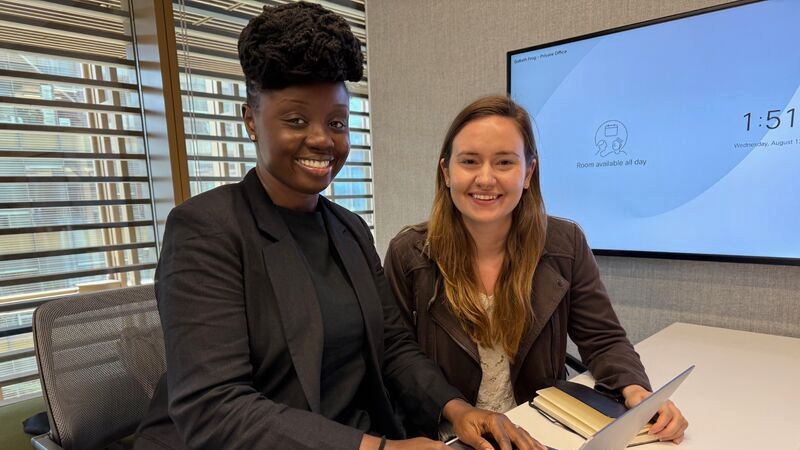
Rose Afriyie and Genevieve Nielsen built mRelief to unlock billions in SNAP benefits for American families. So far their plan is working. To date, the nonprofit has helped more than 5.2 million people secure $2.1 billion in food assistance, they say. To maintain their momentum, the co‑founders average about two partnership meetings a week, often on the road – from a retailer in Southern California, to a charity in South Carolina. And they use ChatGPT to tailor each presentation to a partner’s geographic footprint. They map impact to specific stores and ZIP codes and translate outcomes into the metrics that resonate: “dollars unlocked,” “meals served,” or “households impacted.” “We are a sector challenged by time poverty,” says Afriyie. “We’re trying to do so much more with so much less.” mRelief exists to make it easier for people to access the SNAP benefits they qualify for – quickly, simply, and with dignity. Launched a decade ago, the nonprofit meets people where they are: online or entirely over text. In under three minutes, applicants can answer 10 simple questions to learn if they would qualify for SNAP. The need is urgent, but the needy are underserved. An estimated $140 billion in federal benefits go unclaimed each year, driven by confusing approval processes and the digital divide. “Twenty‑one percent of people who make under $30,000 a year do not have access to a smartphone,” Afriyie explains. So mRelief offers a full SMS pathway today and is exploring voice next, because “poverty is working 24/7.” With more than 200 partnerships – universities, hospitals, food banks, local charities – mRelief pairs trusted community support with friendly software so families don’t fall through the cracks. AI is a force multiplier across the nonprofit’s mission. For partnerships, ChatGPT serves as a research and messaging soundboard, helping the team customize pitch slides for retailers, foundations, and food banks – overlaying mRelief’s data on a partner’s footprint and reframing outcomes in the metrics they value. “The customization for retailers that care about specific geographic footprints was my ‘wow’ moment,” says Nielsen. The result: better‑aligned conversations in half the preparation time. AI also speeds up outcomes for families. An outreach chatbot engages people who learn they’re eligible but don’t apply right away, answering questions and nudging them into the application flow. A document‑checking model gives instant feedback on photo quality (blurry IDs, cropped corners), boosting first‑try document completion by 20% and eliminating an estimated 3,500 manual document reviews per front-line worker in a South Carolina pilot. As Afriyie describes, “Every time you submit an application and there are incomplete documents, that’s one less day that your family has the food that they need to thrive.”
Dive in

Related

Blog
Turning high-school students' curiosity into engaged writing
Jan 6th, 2026 Views 158
Video
AI for Nonprofits: Repurposing Content with ChatGPT
By Kyle Behrend • Jul 17th, 2025 Views 1.6K
Terms of Service