
OpenAI Academy
Article
January 5, 2026

Designing the emotional map of recovery
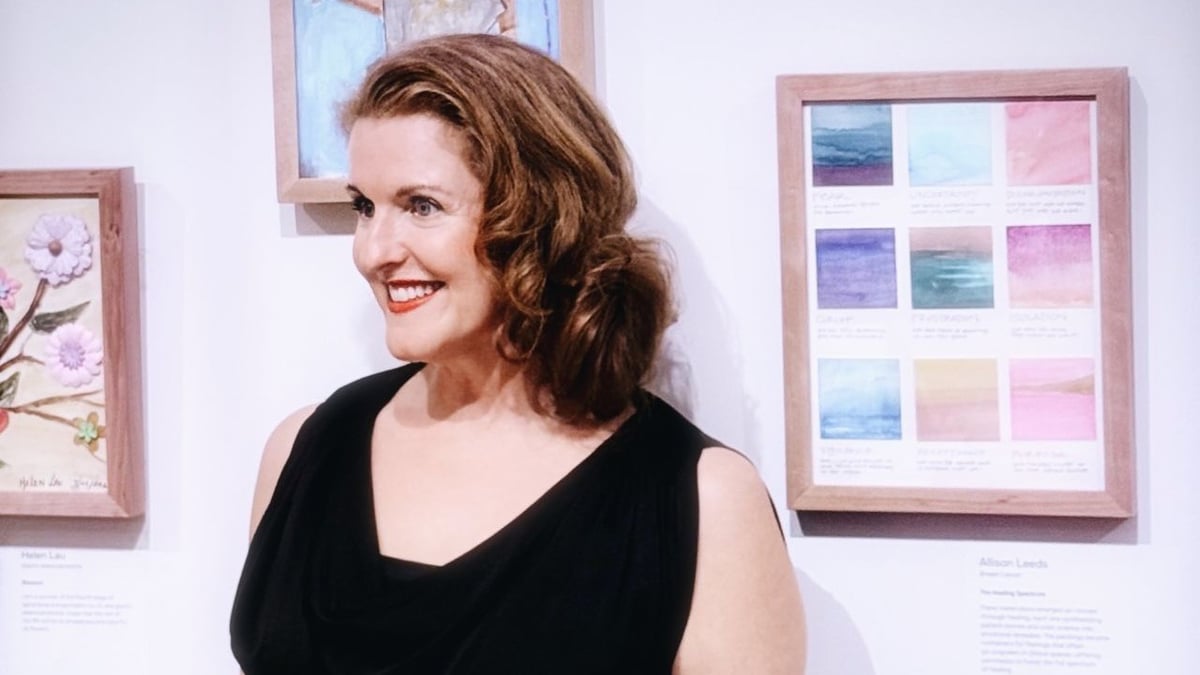
Designing the emotional map of recovery
# healthcare
# Small Business

How a breast-cancer survivor used ChatGPT to turn 11,000 patient stories and color science into “visual medicine”

Designing the emotional map of recovery
Allison Leeds built her new small business out of a problem that medicine rarely solves: the emotional map of recovery. A breast-cancer survivor who’s now cancer free, Leeds was facing another surgery tied to earlier complications and found that clinicians could explain the surgical plan, but not how it would feel to live through the weeks afterward. “There was a lot of information about my surgery plan and what would happen with my body, but almost nothing about my emotional map of recovery,” she says. “No one could really tell me what the first weeks after surgery would feel like.” In February 2025, she started using ChatGPT to close that gap. With a fine arts degree and a career in design leadership in tech, she treated recovery like a user research problem. Using ChatGPT, she scanned “thousands of patient stories across public forums,” ultimately collecting insights from over 11,000 patient experiences to understand what women face after cancer surgery and how they get through it. Then she went further, digging into peer-reviewed color science and the emerging field of neuroaesthetics, which studies how experiences of art and color can affect the nervous system. Leeds gathered studies suggesting color can reduce the need for pain medication, lower blood pressure and heart rate, and decrease aggression. With ChatGPT as a “collaborative partner,” she synthesized the patient stories and color research to create a tool for recovery: a series of art cards that arrive week by week, each pairing a color palette with a mantra. She mailed the cards to herself so they would arrive every Monday during recovery. The result felt like “visual medicine, medicine for my heart, because the doctors were only giving me medicine for my body.” She shared the work with her friends in breast cancer-support groups and social media, and the responses were immediate. One woman told her, “Your art hit me at 3 AM just when I needed it.” A caregiver said it gave her “something tangible” to offer when “it’s hard to find the right words.” That experiment became her business, built in the months between surgeries, with AI operating as a co-founder and product manager. Leeds was one of hundreds of small business owners who attended OpenAI’s recent Small Business Jam, where they received hands-on instruction on how to better use ChatGPT. She was also one of the many attending solopreneurs – self-employed people without any other employees – who use ChatGPT as their sole co-worker. “I couldn’t have built this without my AI workforce,” she says. “It’s like a tiny AI team that helps me be a solopreneur without burning out.” Leeds’ piece, The Healing Spectrum, a set of nine watercolors mapped to nine emotions with accompanying poems, is now on exhibit at SFMOMA. One viewer captured the aspiration behind it: “I wish I could have iPhone screens for each of these.”
Dive in

Related

External Content
The AI Educator Brain on Prompting: Mastering the Art of AI Responses in the Classroom
Mar 20th, 2025 Views 7.4K
Resource
Responsible use of ChatGPT at work
Sep 8th, 2025 Views 8K
Resource
Environmental Impact of AI
Aug 22nd, 2025 Views 5.3K
Resource
Environmental Impact of AI
Aug 22nd, 2025 Views 5.3K
Resource
Responsible use of ChatGPT at work
Sep 8th, 2025 Views 8K
Terms of Service