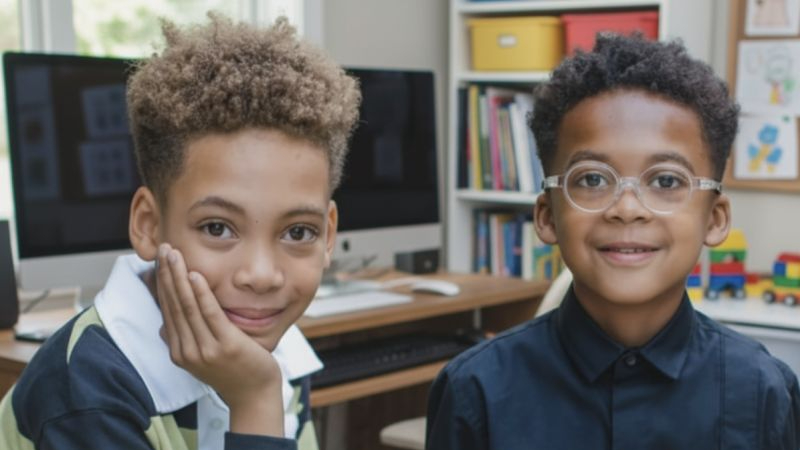
Two Brothers Turn Drawings Into a Business With ChatGPT
# Small Business
Quincy and Jackson Fuller use AI to help design custom company mascots, pitch founders, and ship real products.
Quincy and Jackson Fuller are just 8 and 10 years old, respectively, but they’ve already used ChatGPT to start their own company after first playing around with the tool at home.AI was part of the family’s play: fantasy sea slugs, bedtime stories starring the boys, rough sketches turned into images and narrated scenes. Their dad,Kobie Fuller, a venture investor who works with startups, wanted his sons to become fluent with these tools early. He also wanted them to have real-world skills. So the boys still draw by hand and take drawing classes, and the models extend what they can already do.Then Kobie added business to the mix. A couple of years ago, he had them build mock companies and pitch them. Quincy’s first idea looked more like Build-A-Bear. The business came into focus when Kobie realized the highest-potential market was not one-off toys but custom mascots for companies. That gave the boys a game plan. They would study a brand, sketch characters on paper, and use ChatGPT and OpenAI image tools to turn those sketches into renderings a factory can actually make. They study ads, too. As Quincy put it, “Marketing is also cool.” For most of us, brand language is background noise. For the boys, it is material to work into their drawings.Stuffers is really a family business. Kobie brings market instinct and customer access, and he coaches the boys on pitching. He gets the boys in front of founders, lets them lead the meeting, and teaches what happens after the pitch: customer qualification, follow-up, and closing the deal by asking for an order. Shennel Fuller, the boys’ mother and a children’s apparel founder with production experience, makes sure their ideas cross the line and become finished products.Everyone was surprised by how quickly that mattered. When one founder said yes on Zoom to 500 stuffed mascots, the family suddenly had a $7,000 order to fulfill. More followed. Kobie said the business reached five-figure revenue within months, and the boys said this spring that they had shipped about 5,000 units.Kobie says an important aspect of the project is helping parents and schools see how kids can use AI without being taught to fear it. For the boys, the tools expand what they can do, and raise their ambitions. They make it possible to go from a child’s drawing to a manufacturable object. Jackson and Quincy still have to come up with the character, make the pitch and win the order.They are learning business by drawing, pitching, closing, and shipping. Their advice to other kids thinking about starting a business: “It will be really hard, but I think you’ll like it.”