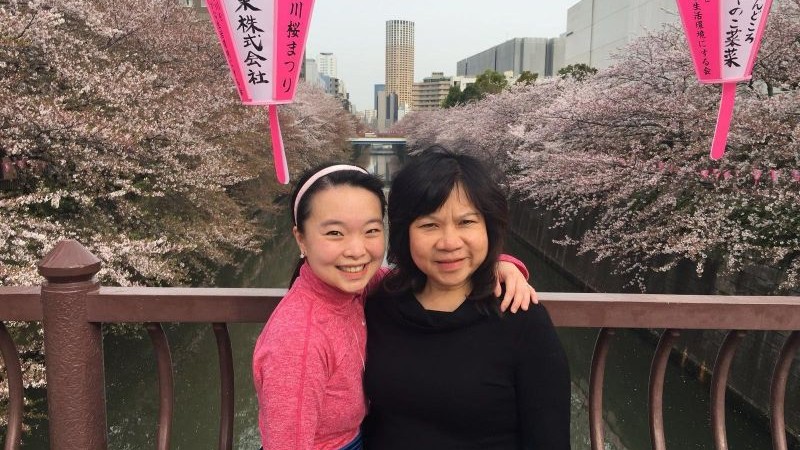
How ChatGPT helped a daughter navigate a medical emergency across borders
With ChatGPT, Ayrin Santoso found a way to navigate care for her mother, Fifi, who lives in the Indonesian city of Surabaya. Ayrin, a tax professional working for OpenAI in San Francisco, had already been using ChatGPT regularly, driven by a duty she feels to her aging parents: “How can I actually still be there and help them when they need something?”
Last autumn, on her mother’s birthday, a crisis arrived. Ayrin’s sister called to say their mother had abruptly lost vision in her left eye. The family tried to get immediate care, but struggled to get a doctor’s appointment amid the everyday frictions of Indonesian healthcare, and wound up seeing a nurse who recommended eye drops. Fifi still could not see. “It’s probably nothing, you’re too tired, you’re too stressed,” her mother was told.
Ayrin didn’t want to wait and see, she wanted to act. “I didn’t think it was fine,” she said. “It just sounded like something serious was happening.” She gathered every detail her sister could share, what the nurse had said, the symptoms, and the family’s own theories, then started a conversation with ChatGPT.
The response she received was blunt: “This is very serious.” ChatGPT raised concerns that the sudden vision loss was consistent with retinal hemorrhage or hypertensive retinopathy, which can be an early sign of a hypertensive emergency. It warned that this kind of presentation carries elevated short-term risk of stroke, heart attack, and further retinal damage, and advised urgent escalation beyond eye drops. Crucially, ChatGPT also prompted Ayrin to have her family check Fifi’s blood pressure right away. When they did, it was over 200 mmHg. That concrete number made the risk feel real to everyone, and helped Ayrin persuade her family to push for hospital admission.
That guidance changed the family’s trajectory. Despite skepticism toward AI and the difficulty of being admitted, Ayrin convinced her relatives to take Fifi to the hospital the next day. In Indonesia, even in a major city like Surabaya, access is limited by a scarcity of caregivers, long waits for specialists, and uncertainty about cost and quality. Ayrin summarized it simply: “They live in a big city, but it’s hard to get care.”
Fifi finally received an expert opinion after admission. The doctor confirmed what Ayrin had feared: Fifi was near a stroke event and needed close observation. She stayed in the hospital for more than a week, monitored until her blood pressure entered a safer range, then discharged on medication. ChatGPT offered practical prevention guidance at the time, including twice-daily home blood-pressure monitoring and lifestyle changes like gentle exercise and diet, which the treating physician later confirmed independently and reinforced at discharge.
From thousands of miles away, ChatGPT helped Ayrin see that her mom needed urgent treatment: Fifi continues to monitor her blood pressure as part of ongoing care, and has recovered about 95% of the vision in her eye.